

 The UK government hiring market across FY25/26 reflected a sector operating under increasing pressure to deliver against regulatory change, housing demand, infrastructure priorities, and local government reform.
While demand remained steady across core public sector functions, hiring activity became increasingly shaped by legislative change, workforce shortages, and growing reliance on interim and specialist professionals.
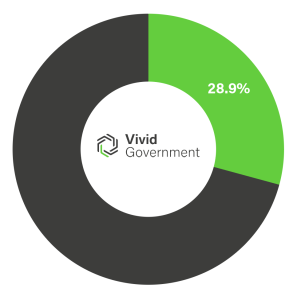
UK public sector positions accounted for 28.9% of all placements across FY25/26, reinforcing its position as one of the largest and most active sectors across the wider Vivid Resourcing market.
Dominating sub–sectors: planning, law, and housing contractor demand on the rise
 Town planning represented the largest share, with ownership of 24.6% of all public sector placements, highlighting the continued importance of planning delivery as councils respond to housing targets, regeneration programmes, and major infrastructure projects.
This demand is expected to continue into FY26/27. As permanent town planning hiring specialist Joe Senior explains, the sector is likely to experience “solid growth, driven by housing demand, planning reform, and major infrastructure/energy projects” creating stronger hiring demand across both public and private sector organisations.
The legal subsector followed at 18.3%, reflecting sustained pressure on local authority legal teams as legislative change and organisational restructuring increased workloads across governance, adult social care, and regulatory functions.
Within this, interim hiring remained particularly active. As interim legal contractor consultant Georgia Howe notes, local government reorganisation created “a particular demand for governance lawyers,” while ongoing shortages across adult social care legal positions created a highly candidate-short market throughout the year.
“Within the last financial year in the government legal team, we noticed a particular demand for Governance Lawyers, given the local government reorganisation causing a lot of change for most Authorities.”
— Georgia Howe, Manchester
Housing jobs accounted for 14.5% of placements, reflecting continued pressure across both local authority and supported housing environments. Ongoing affordability challenges, legislative reform, and increasing service demand all contributed to sustained hiring activity across the market.
Environmental health-related positions represented 10.9% of placements, while estates & regeneration accounted for 10.1%, underlining the continued need for operational and project-based support as councils balance compliance, redevelopment, and public infrastructure priorities.
Surveying (6.5%) and finance & accounting (8.5%) remained steady contributors throughout the year, supporting both day-to-day service delivery and wider transformation initiatives across local government.
Regulation driving specialist demand
One of the defining themes across FY25/26 was the impact of regulatory change, particularly within building control and legal services.
Within building control, demand for highly qualified professionals accelerated significantly as more organisations joined the Building Safety Regulator Framework and increased their involvement in higher-risk building projects.
According to building control specialist Lauren Porteous, this created substantial demand for senior-level Registered Building Inspectors throughout the year.
“Within building control we saw a massive spike in the need for Class 3H RBIs as more and more private sector companies took on BSR work.”
— Lauren Porteous, Building Control Specialist
This shift reinforced a wider trend seen across government hiring: organisations increasingly requiring highly specialised professionals capable of operating within evolving regulatory environments.
The legal market experienced similar pressure. Alongside governance-related demand, local authorities faced persistent shortages across social care law, creating increased competition for experienced candidates and extending hiring timelines across many regions.
Interim hiring and workforce flexibility
Across much of the government market, interim and contract hiring became increasingly important as organisations faced budget restrictions, restructuring, and delays in permanent recruitment processes.
This trend was particularly visible within legal and planning functions, where councils increasingly relied on senior contractors to maintain service delivery and manage project workloads.
Town Planning Recruitment Specialist Archie Brindle highlights that contract demand for planners is expected to remain particularly strong moving into FY26/27, especially within planning policy functions as authorities face pressure to deliver local plans more efficiently.
“Contract demand for town planners looks strong heading into the next FY, particularly in Planning Policy.”
— Archie Brindle, Manchester
Similarly, Jacob Hall notes that local government reform is expected to further increase reliance on legal contractors as organisations face limitations around permanent headcount growth:
“The market for legal contractors is expected to be busier this financial year, driven by local government reform limiting the authorisation and filling of permanent roles, increasing reliance on contract support.”
— Jacob Hall, Legal Contractor Managing Consultant
These pressures are contributing to a broader shift in hiring strategy across government markets, with organisations increasingly prioritising workforce flexibility and specialist project support over traditional long-term hiring models.
Early action creates advantage
Firms already investing in cloud, reporting or data platform upgrades should align this decision with existing transformation roadmaps. Designing the data model once and configuring outputs for either regime reduces duplication and future rework.
Handled proactively, this moment becomes an opportunity to improve resilience, simplify architecture and strengthen governance, elements that could prove highly advantageous in today’s competitive market.
Housing reform and changing service demand
Housing remained another major area of focus throughout FY25/26, particularly as legislative reform began reshaping both public and private sector requirements.
The passing of the UK Renters Reform Bill is expected to significantly influence housing demand moving into the next financial year, with potential knock-on effects across supported housing and local authority services.
As Oscar Bennison explains, tighter eviction regulations could reduce short-term private sector housing availability, increasing demand for alternative housing support:
“The UK Renters Reform bill has passed which will affect housing markets. It has now been harder to evict tenants since April, so this should lead to less private sector housing in the short-term. This could lead to an increase in supported housing requirements.”
— Oscar Bennison, Interim Housing Personnel Specialist
Alongside this, continued housing shortages and regeneration priorities are expected to sustain demand across planning, estates, surveying, and housing operations throughout FY26/27.
Looking ahead: regulation, reform, and delivery pressure
As the market moves into FY26/27, hiring demand across the UK government sector is expected to remain strong, but increasingly shaped by regulation, reform, and operational delivery pressures.
Building safety legislation is expected to remain a major driver of hiring activity. Building Control team member Enya Fisher highlights that the introduction of the Building Safety Levy will likely create “a huge rise in administrative vacancies across the public sector,” while continued onboarding to the Building Safety Regulator framework is expected to increase demand for senior-level contractors.
At the same time, evolving regulations may begin opening more opportunities for mid-level registered inspectors, helping to ease some of the current bottlenecks affecting the sector.
“New regulations involving the Building Safety Levy being introduced will result in a huge rise in administrative vacancies across the public sector.”
— Enya Fisher, Building Control Interim Staffing Consultant
Across planning and legal, government reform and infrastructure delivery are expected to continue driving demand for experienced interim contractors, while housing reform is likely to increase operational pressures across local authorities and supported housing providers.
What this means for hiring
As with other specialist markets, government hiring is becoming increasingly defined by complexity rather than volume alone.
Demand remains high across planning, legal, housing, and regulatory functions, but organisations are facing growing challenges around access to experienced professionals, evolving compliance requirements, and changing workforce expectations.
In this environment, successful hiring increasingly depends on access to specialist talent networks, market insight, and flexible staffing solutions capable of responding quickly to changing regulatory and operational demands.
We’re here to help
- If you’re a manager needing assistance with your current or future hiring needs, contact us to be put in touch with a market expert.
- Have a question? Find out more about the services that can help you here.
- Looking for more insights? Check out the latest news.